
8/7/26
Understanding how to think things through – to push your mind past the first step – can help you solve problems, avoid problems, and take better actions.
The best way to examine the long-term consequences of our decisions is to think things through.
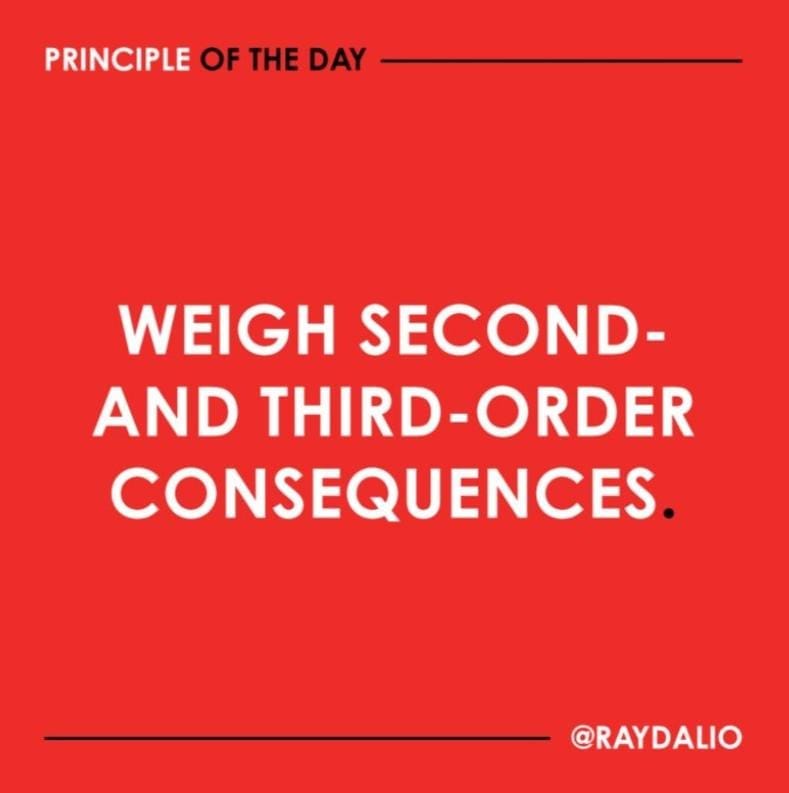
This is called Second order thinking.
Most mistakes don’t happen because people fail to think,
They happen because people stop thinking too soon.
First-order thinking focuses on the immediate reward. It sees the promotion, the purchase, the argument won, the shortcut taken, or the pleasure gained today. It answers only one question:
“What happens next?”
Second-order thinking asks a harder question:
“And then what happens after that?”
A single decision never arrives alone. Every choice brings consequences, and every consequence creates another choice. The disciplined mind follows the chain before taking the first step.
Nature offers a quiet lesson. A chess grandmaster rarely chooses a move because it looks strongest on the current turn. The move is chosen because it shapes the next five, ten, or twenty moves that follow. The amateur sees the board. The master sees the future hidden inside the board.
Before every important decision, pause long enough to ask one more question :And then what?
That single habit separates reaction from wisdom.
First-order thinking is fast and easy. It happens when we look for something that only solves the immediate problem without considering the consequences. For example, you can think of this as I’m hungry, so let’s eat a chocolate bar.
Second-order thinking is more deliberate. It is thinking in terms of interactions and time, understanding that despite our intentions our interventions often cause harm. Second order thinkers ask themselves the question “And then what?” This means thinking about the consequences of repeatedly eating a chocolate bar when you are hungry and using that to inform your decision. If you do this you’re more likely to eat something healthy.
Ray Dalio, says it beautifully, “Failing to consider second- and third-order consequences is the cause of a lot of painfully bad decisions, and it is especially deadly when the first inferior option confirms your own biases. Never seize on the first available option, no matter how good it seems, before you’ve asked questions and explored.”
The future belongs to those who can see past the present.
Follow the Second-order principle & stay blessed forever.