
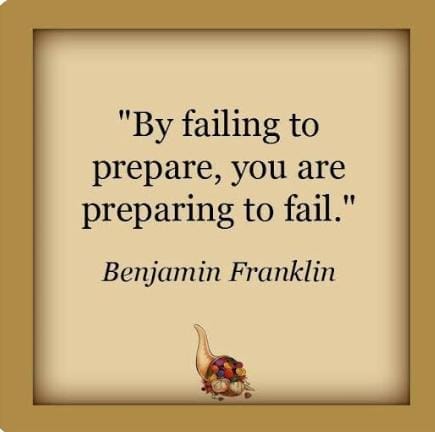
7/9/26
Think of planning as deciding what to do, and preparation as equipping yourself to do it.
Your plans won’t save you, But your preparation will.
I used to obsess over the perfect plan. Every step mapped out, Every variable accounted for, A clean, clear path from A to B.
Then life happened with all its uncertainities and dynamics.
Here’s what I’ve learned:
Planning is based on the expectation of order.
Preparation is based on the expectation of chaos.
One assumes the world will cooperate with your timeline.
The other assumes it won’t.
Planning is about creating a roadmap. It assumes control and predictability, and answers the question: “What should we do?”
Preparation is about building readiness. It assumes the unexpected will happen—and equips you with the mindset, skills, and systems to adapt. It asks: “Who must we become to handle what’s coming?”
It’s the difference between having a plan and being able to shift gears when that plan no longer applies.
The person with the perfect plan falls apart the moment something goes sideways.
The person who prepared never needed things to go right in the first place.
Plan for order and you’ll be destroyed by chaos.
Prepare for chaos and you’ll thrive in any condition.
The most resilient people I know aren’t better planners.
They’re preparered better.
They build skills instead of spreadsheets.
They train responses instead of scripting outcomes.
They invest in adaptability instead of certainty.
Stop perfecting the plan and Start preparing for everything the plan can’t predict.
Planning still matters, especially when the path is clear and the margin for error is tight. It’s essential for operations, compliance, and areas where consistency counts.
But when you’re leading through complexity, ambiguity or rapid change—which is often the case—planning alone isn’t enough. In these moments, preparation is your edge. It’s what enables you to navigate uncertainty, adapt quickly, and move forward when the original plan becomes obsolete.
The real work of leadership is not forecasting the future, but building teams and cultures that are ready to meet it.
I still plan. But I prepare more. Because when I look back, the defining moments—the pivots, the unexpected turns—weren’t the ones I planned for, They were the ones that tested my readiness.
So ask yourself: Are you preparing for the future you expect—or the one you can’t yet see?
Because the future will favour the prepared.
Plan for the best but prepare for the worst and stay blessed forever.