
6/27/26
Healthy, long-term happiness is about a positive, steady baseline, not perpetual elation.
The Harvard Study of Adult Development highlights that sustainable happiness is driven by warm, steady social connections rather than constant pleasure or wealth.
In a 2005 issue of the Review of General Psychology, Sonja Lyubomirsky, Kennon Sheldon and David Schkade looked at years of research to figure out what contributes to “chronic happiness” as opposed to temporary happiness.
Based on their survey, they came up with a three-part model:
About half of our happiness is biological. Each person seems to have a happiness “set point”, which accounts for
roughly 50% of our sense of well-being. Because this set point is genetic, it’s hard to change.
Another 10% of happiness is based on circumstances— external factors beyond our control. These include biological
traits like age, race, nationality and gender, as well as things like marital status, occupational status, job security and income. Our financial situation is part of this 10%—but only a part—which means it accounts for just a fraction of our total happiness.
The final 40% of happiness comes from intentional activity— the things we choose to do.
While circumstances happen to you, intentional activity happens when we act by doing things like exercising, pursuing meaningful goals, or keeping a gratitude journal.
According to the authors, because circumstances— including our financial situation—play such a small role in our general contentment, it makes more sense to boost our bliss through intentional activity, by controlling the things you can and ignoring those you can’t.
Although our financial situation plays only a small role in our overall happiness, most people believe it’s more important than that. Because of this, many people spend their lives striving for more money and possessions—but find that this materialism makes them less happy.
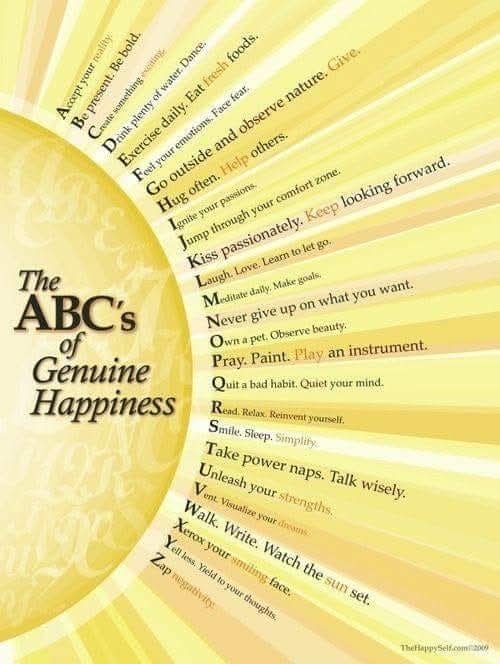
Boost your happiness and bliss through intentional activity, get to a state of ‘Chronic Happiness’ and Stay Blessed Forever.